
Faxing from a Smartwatch: Is That Next?
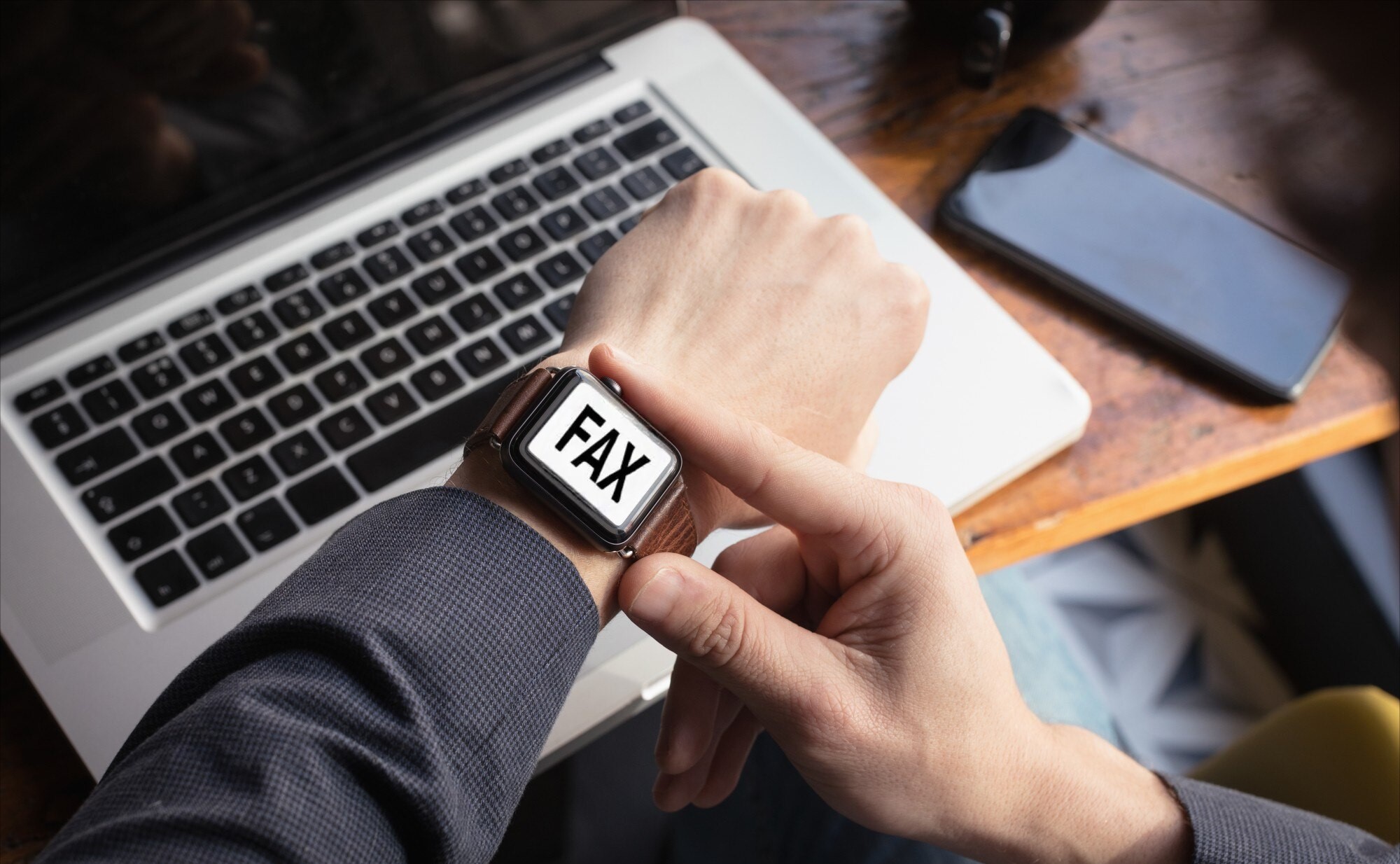
Faxing – it’s one of those classic office technologies that many people thought would fade into the sunset years ago. But surprisingly, fax machines are still alive and kicking, especially in industries like healthcare, legal, and government sectors. So, why are we even talking about faxing today? And more importantly, what if you could send a fax from your wrist using a smartwatch? Sounds futuristic, right? Well, let’s dive in and explore if faxing from a smartwatch is the next big thing in tech.
The Evolution of Fax Technology
Faxing dates back to the 19th century but only became a common household and office tool around the 1980s. Initially, fax technology was entirely analog, sending scanned images of documents over telephone lines. This was revolutionary at the time because it allowed businesses and individuals to quickly send important documents over long distances without the need for physical mail. However, analog faxing had significant limitations, including low image quality, slow transmission speeds, and a strong dependency on stable telephone connections, which could sometimes lead to failed or incomplete transmissions.
With the rise of digital technology, faxing underwent a major transformation. Digital faxing introduced internet fax services and email-to-fax gateways that allowed documents to be sent and received via the internet without the need for a physical fax machine. This shift not only improved the speed and clarity of fax transmissions but also made faxing more accessible and convenient, especially for businesses on the go. Despite the explosion of email and other forms of digital communication, faxing has remained relevant—particularly in industries like healthcare, legal, and government—where secure transmission, legal authenticity, and signatures are crucial.
The Rise of Smartwatches
Smartwatches have quickly evolved from simple step counters to powerful mini-computers worn on the wrist. Modern smartwatches offer a wide array of features, including heart rate monitoring, GPS navigation, message notifications, voice assistants, and even mobile payment capabilities. These devices have become essential tools for many people who want to stay connected and productive without always relying on their smartphones. The convenience of glancing at your wrist to check messages or control music is a big part of why smartwatches have grown so popular.
In the US, leading smartwatch brands include Apple Watch, Samsung Galaxy Watch, and Fitbit, each competing to provide the best blend of health tracking, communication, and productivity features. These devices are designed to make everyday tasks easier and more efficient. Given how smartwatches already handle calls, texts, emails, and even some work apps, the question naturally arises: could sending a fax from a smartwatch become the next logical step? Could this convenience feature become a reality in the near future?
Can You Fax from a Smartwatch
At first glance, faxing on a smartwatch may seem far-fetched. After all, faxing traditionally requires scanning, document management, and a relatively large screen—all tasks that appear challenging for a device with a tiny display. However, as technology advances rapidly, many tasks once thought impossible on small devices have become routine. So, could smartwatches be the next faxing device?
Currently, the ability to send a fax directly from a smartwatch is very limited or nonexistent, but that doesn’t mean it’s impossible. Here’s why:
Technical Challenges
- Screen Size and Interface: The small screen of a smartwatch makes it difficult to view or edit documents and attach files needed for faxing. Managing multi-step tasks like document selection, entering fax numbers, and confirming transmissions can be cumbersome on such limited display space.
- Connectivity: Most smartwatches rely on Bluetooth or Wi-Fi connections tethered to a smartphone for internet access. Sending fax data requires reliable and continuous data transmission, which can be challenging when the watch depends on another device.
- Security: Faxing often involves sensitive or confidential information. To protect this, fax transmissions require strong encryption and compliance with privacy regulations like HIPAA. Smartwatches currently have limited capacity to implement advanced security protocols on their own.
Potential Solutions and Innovations
- Voice Command Faxing: Imagine simply telling your smartwatch, “Send this document to Dr. Smith,” and the watch handles the rest via voice recognition technology. This could simplify the process and bypass the need for complicated screen interactions.
- Cloud Fax Services Integration: Instead of processing fax data locally, the smartwatch could act as a control panel that sends commands to cloud-based fax services, which handle the actual document transmission. This offloads the heavy work and makes faxing feasible on small devices.
- Companion Smartphone Apps: Another solution is having the smartwatch initiate or control the faxing process, but relying on a connected smartphone to complete the sending. This bridges the technical gap and leverages the phone’s better hardware and connectivity.
Comparison: Faxing on Smartwatch vs. Smartphone and PC
Faxing from a smartwatch offers unique advantages but also comes with clear limitations compared to more traditional devices like smartphones and PCs. One major benefit is convenience: a smartwatch is always on your wrist, making it incredibly easy to send quick faxes without digging through pockets or bags for your phone or booting up a computer. Voice command capabilities also make it possible to send faxes hands-free, which is a game-changer when multitasking or on the move. This immediacy and ease of access are perfect for urgent, simple fax transmissions.
On the flip side, smartwatches face significant challenges when handling fax tasks. Their small screens are not ideal for viewing or editing documents, which limits their use for anything beyond quick, simple faxes. Additionally, most smartwatches rely on tethered connections through smartphones or cloud services to transmit fax data, creating dependencies that can affect reliability. Smartphones and PCs, by contrast, offer much more robust environments for faxing. They support detailed document management, bulk faxing, and better user interfaces, making them the preferred choice for complex or high-volume fax needs.
| Aspect | Smartwatch | Smartphone | PC |
| Advantages | Always on your wrist, ready for quick faxing | Larger screen, better for document management | Powerful hardware, ideal for bulk and detailed faxing |
| Voice command options for hands-free operation | Portable with strong connectivity options | Full control, multitasking, and file handling | |
| Drawbacks | Small screen limits document viewing/editing | Battery life and network dependency | Less portable, requires fixed workspace |
| Dependent on phone or cloud for transmission | Less ideal for very large batch faxing | Not as immediate or on-the-go as mobile devices | |
| When to Choose | Quick, urgent faxes on the go | Balanced use: moderate document handling & mobility | Detailed, bulk, or professional fax management |
Market Trends and Consumer Interest
Currently, there’s very limited buzz or consumer demand specifically around sending faxes from smartwatches. Most smartwatch users primarily focus on fitness tracking, messaging, notifications, and call handling. Faxing hasn’t yet become a talked-about or desired feature, as people generally see it as outdated or too complex for tiny wrist devices. Nonetheless, industry experts believe that as wearable technology continues to evolve, new communication functions—including faxing—may carve out a niche market.
The idea of merging legacy communication methods like fax with modern wearable tech is intriguing. It represents a fusion of old and new, potentially opening doors for professionals who need quick and secure document transmission without relying on their phones or computers. As smartwatches gain more processing power and improved connectivity, and as cloud services advance, the integration of faxing could become more practical and appealing—especially for on-the-go users who want everything accessible on their wrist.
Privacy and Security Implications
Faxing sensitive information requires stringent privacy protections and strong encryption, especially in regulated industries like healthcare and legal services. Regulations such as HIPAA in the U.S. impose strict requirements on how personal and medical data are transmitted and stored. For smartwatches to be considered a viable tool for faxing, they must rise to this challenge by offering secure transmission channels and protecting data from breaches or unauthorized access.
Currently, smartwatches have limited capacity to implement advanced security protocols on their own, making them potentially vulnerable if used improperly. To overcome this, manufacturers and service providers will need to rely heavily on secure cloud platforms with robust authentication methods and encrypted communication. Without these safeguards, the risk of data leaks or interception is too high, which could deter adoption of faxing features on smartwatches for sensitive documents. Ensuring privacy and compliance will be key to unlocking this functionality safely.